
Inspo & Ideas, News & Top Lists
How to choose a diamond engagement ring
Whether you're planning to pop the question, are dropping hints about a proposal, or have already said 'Yes', here's all you need to know about choosing a diamond engagement ring, from understanding the 4Cs to diamond cuts, carats, settings, lab-grown diamonds and gemstone alternatives.
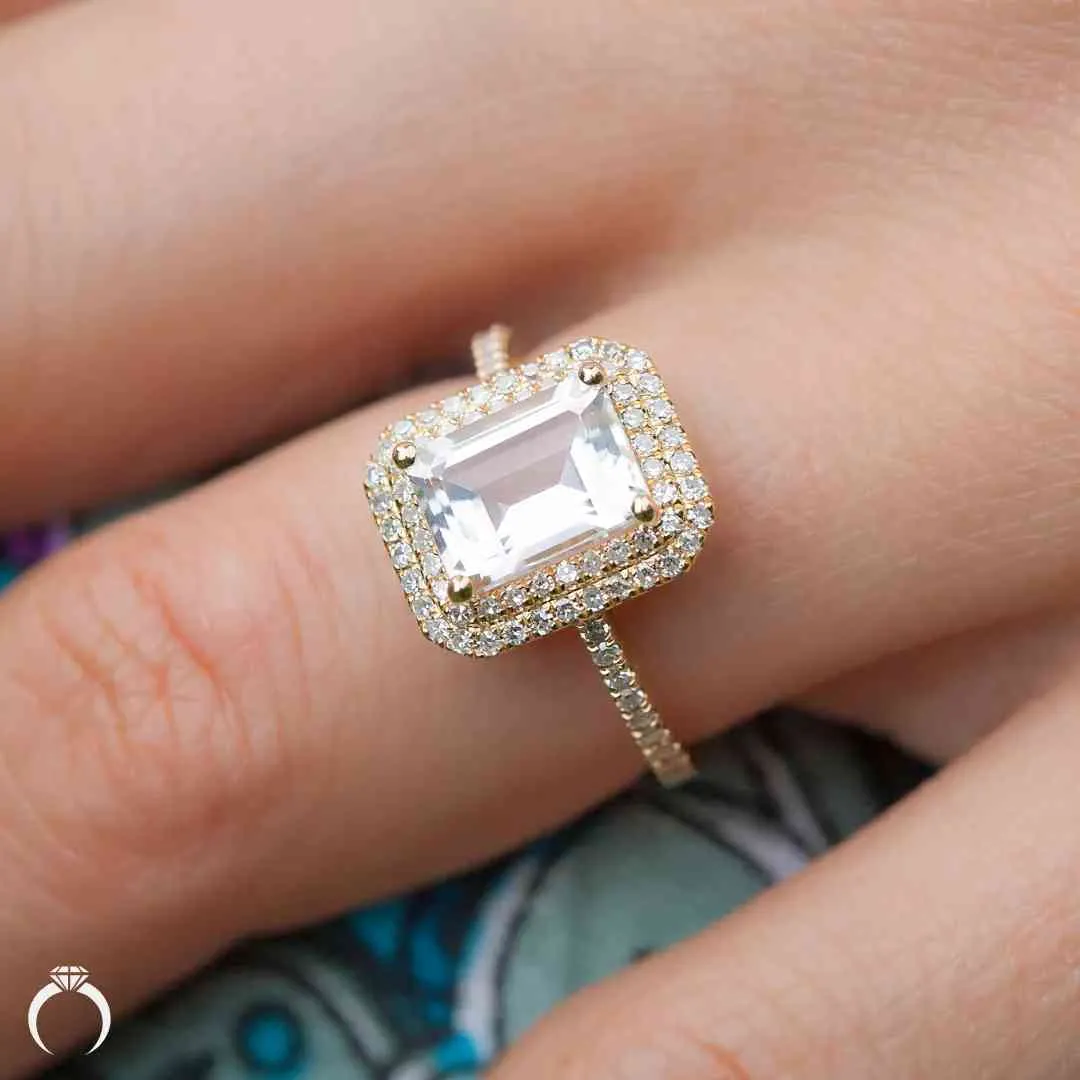 Xennox Diamonds
Whether you’re shopping together or planning a surprise proposal, understanding the basics of diamonds and engagement rings will help you find a ring that looks beautiful, suits your style and works within your budget.
From the 4Cs of diamonds – cut, colour, clarity and carat – to lab-grown diamonds, alternative gemstones and jewellery buying considerations, ABIA’s complete guide to diamond engagement rings has been compiled to help ensure you know what to look for before you hit the jewellery counters.
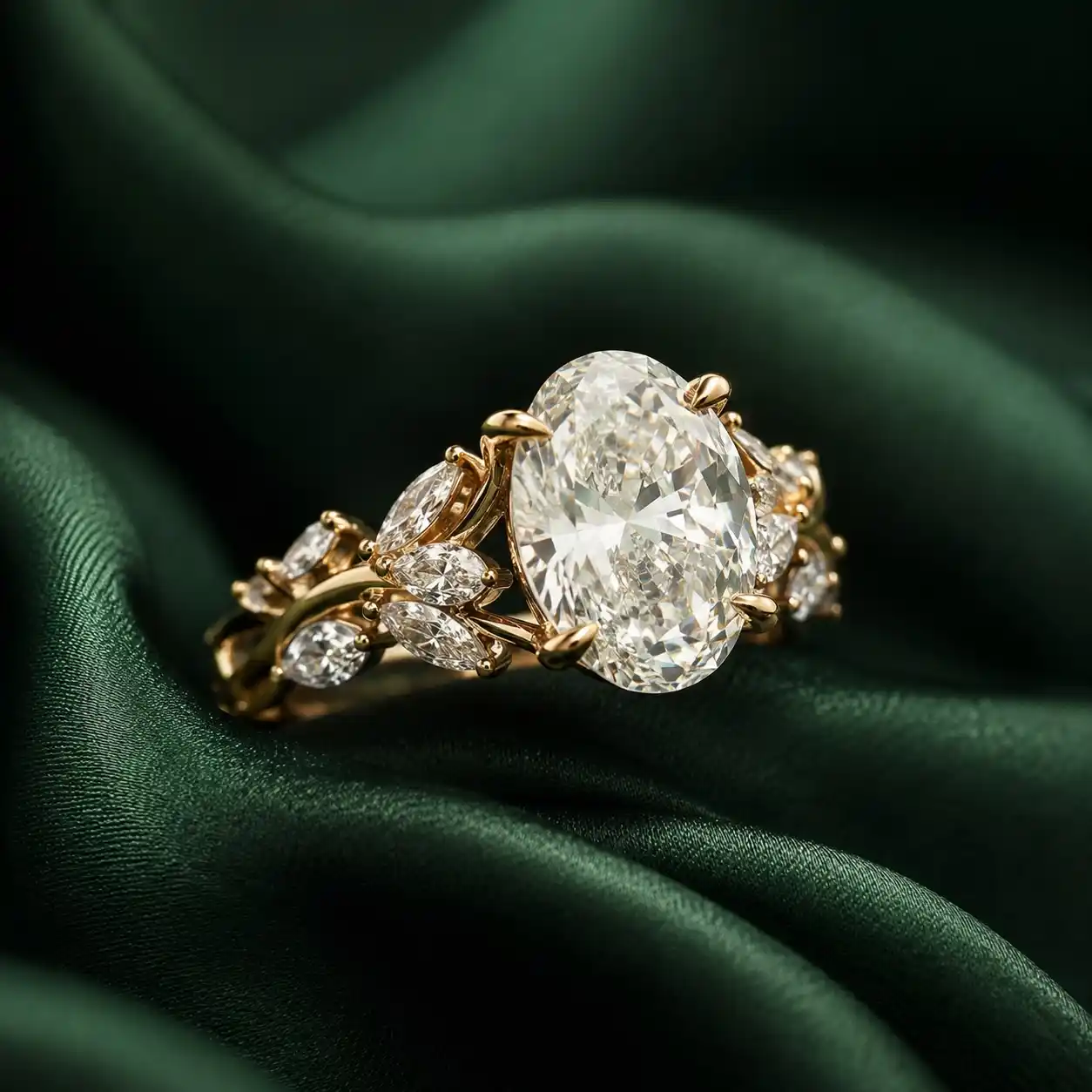
Maleny Jewellers
Start with your budget
Before falling head over heels for a particular ring, it’s worth deciding how much you’re comfortable spending.
There’s no set amount you need to spend on an engagement ring. The old-fashioned idea that an engagement ring should cost a particular number of months' salary is just that – old-fashioned. Your budget should reflect your own financial circumstances and priorities.
When setting your engagement ring budget, remember to allow for:
- The diamond or gemstone
- The ring setting and precious metal
- Custom design fees, if applicable
- Engraving
- Ring resizing
- Insurance
- Future maintenance and cleaning
A reputable jeweller should be able to show you a range of options within your budget rather than pushing you towards a particular price point.
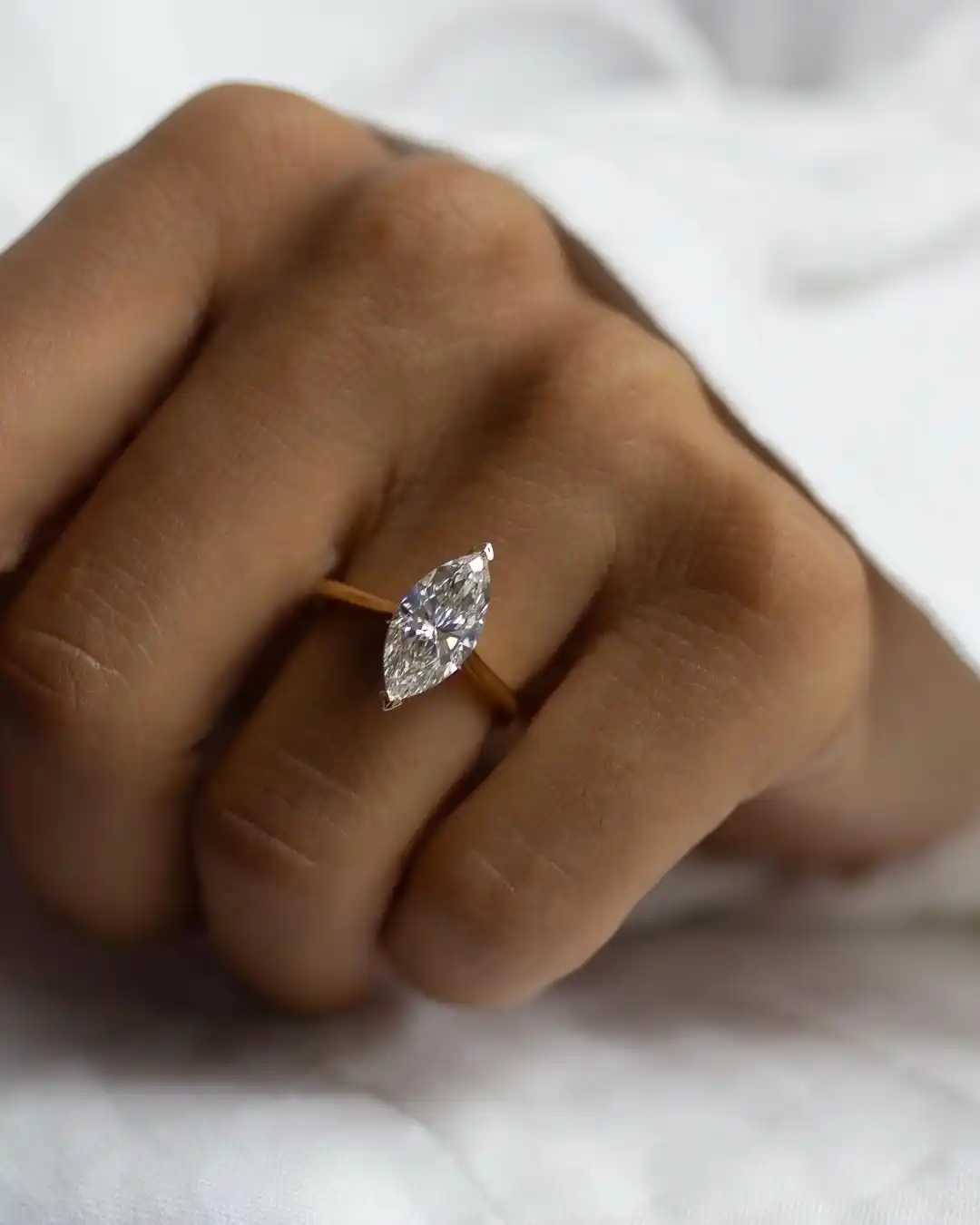
Morgan & Co
Understanding the 4Cs of diamonds
If you’re buying a diamond engagement ring, you’ll quickly come across the term ‘4Cs of diamonds’. These are cut, colour, clarity and carat, and together they help determine a diamond's appearance, quality and value.
The highest grade in every category doesn't necessarily mean the best diamond for your engagement ring though, so understanding what to look for is key, and professional jeweller should be able to help you find the right balance.
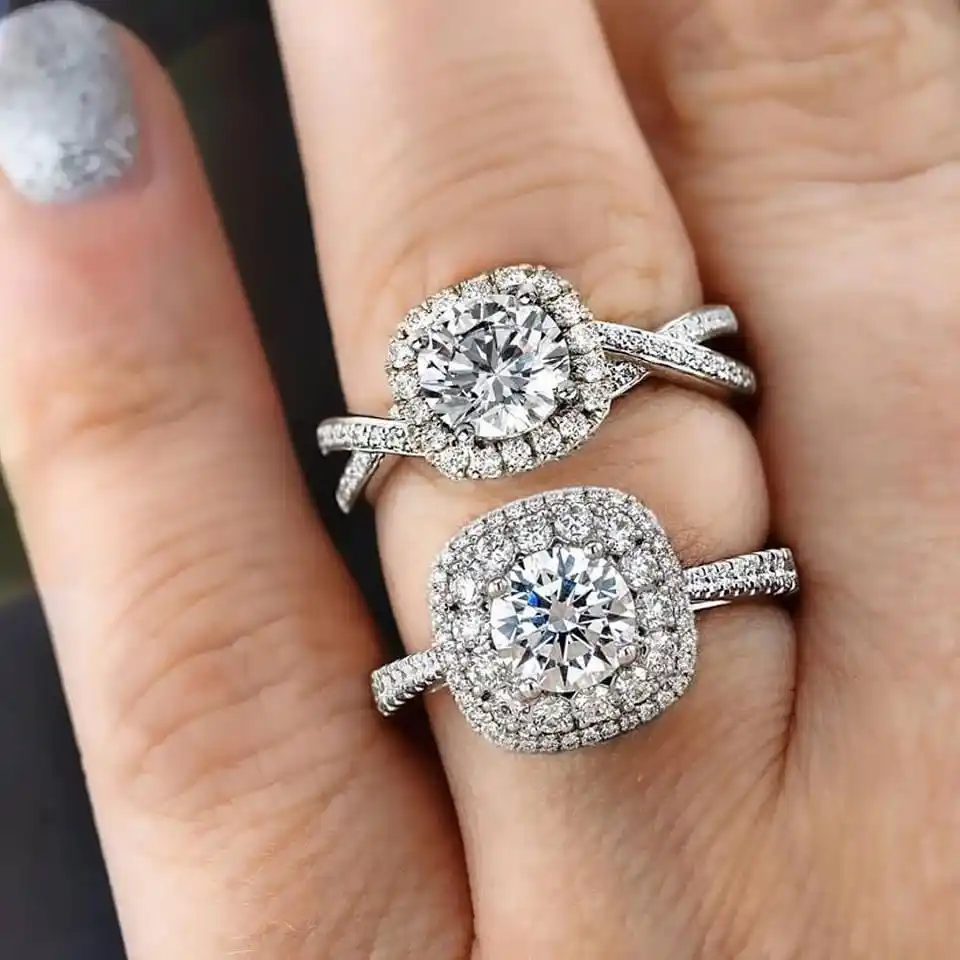
Xennox Diamonds
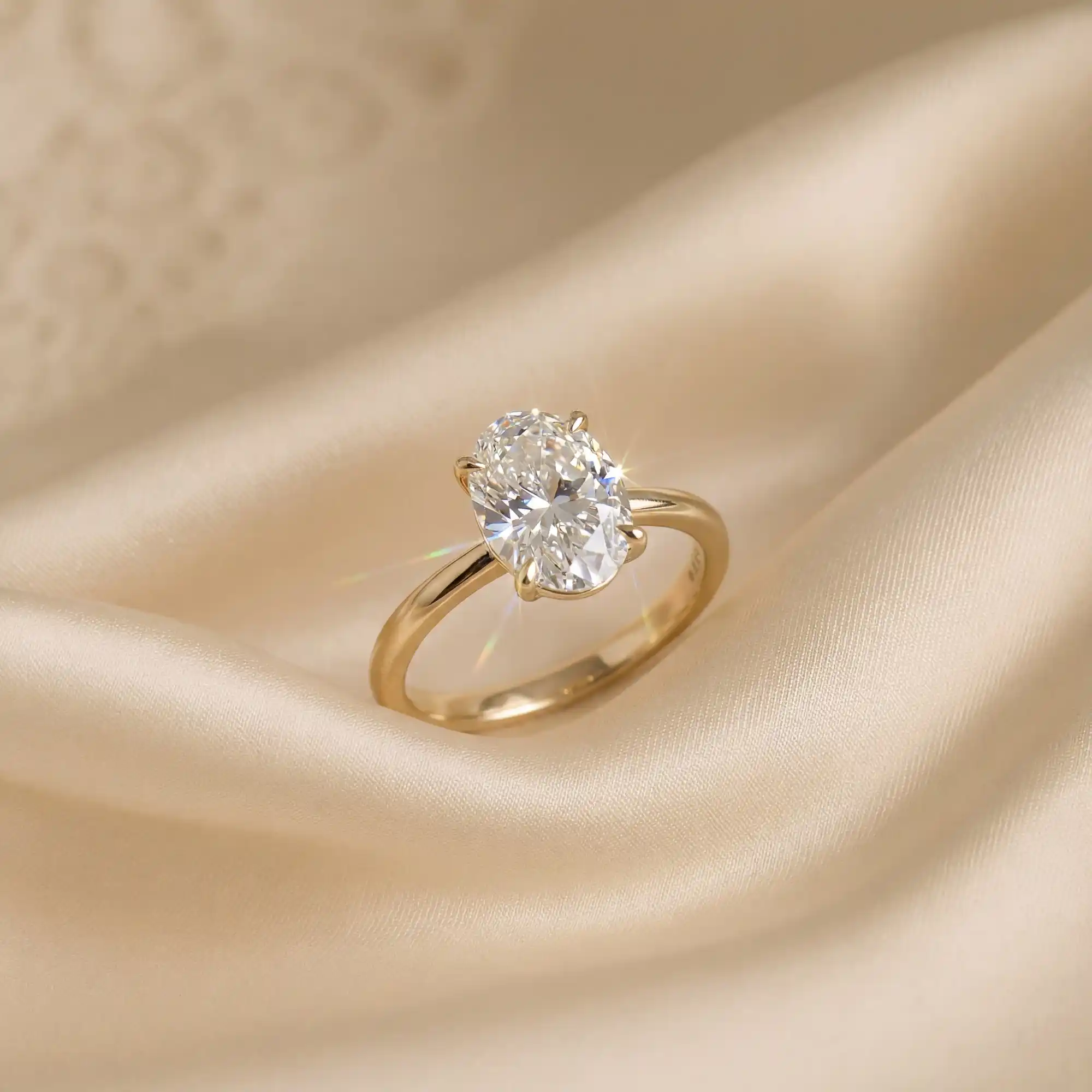
Diamond cut
Diamond cut is one of the most important things to consider because it has a major impact on how much a diamond sparkles.
Cut refers to how well a diamond has been proportioned, shaped and finished – rather than whether it is round, oval or another shape.
A well-cut diamond reflects light beautifully, creating the sparkle that makes diamonds so appealing.
When comparing diamonds, look for a good or excellent cut grade where grading information is available. Remember that diamond cut and diamond shape are not the same thing.
Gerard McCabe
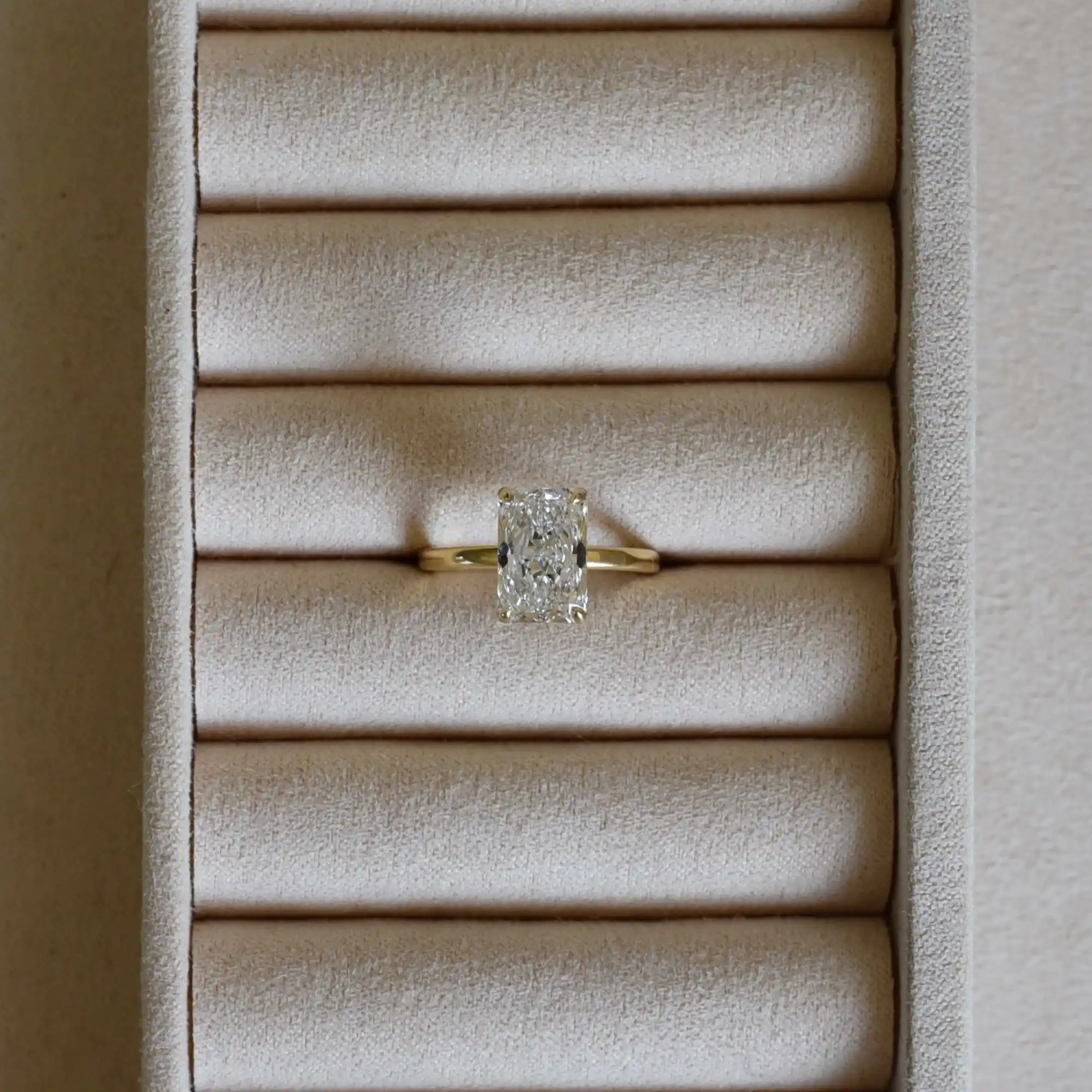
Diamond colour
Diamond colour refers to how much colour is visible in a white diamond.
The traditional grading scale runs from D, which is colourless, through to Z, with increasing amounts of yellow or brown.
For many engagement rings, you don't necessarily need a top-of-the-scale D-colour diamond. Depending on the shape and setting, a slightly lower colour grade can look beautifully white while allowing more of your budget to go towards size or cut.
Warm-toned diamonds can also look particularly beautiful when paired with yellow or rose gold.
Morgan & Co
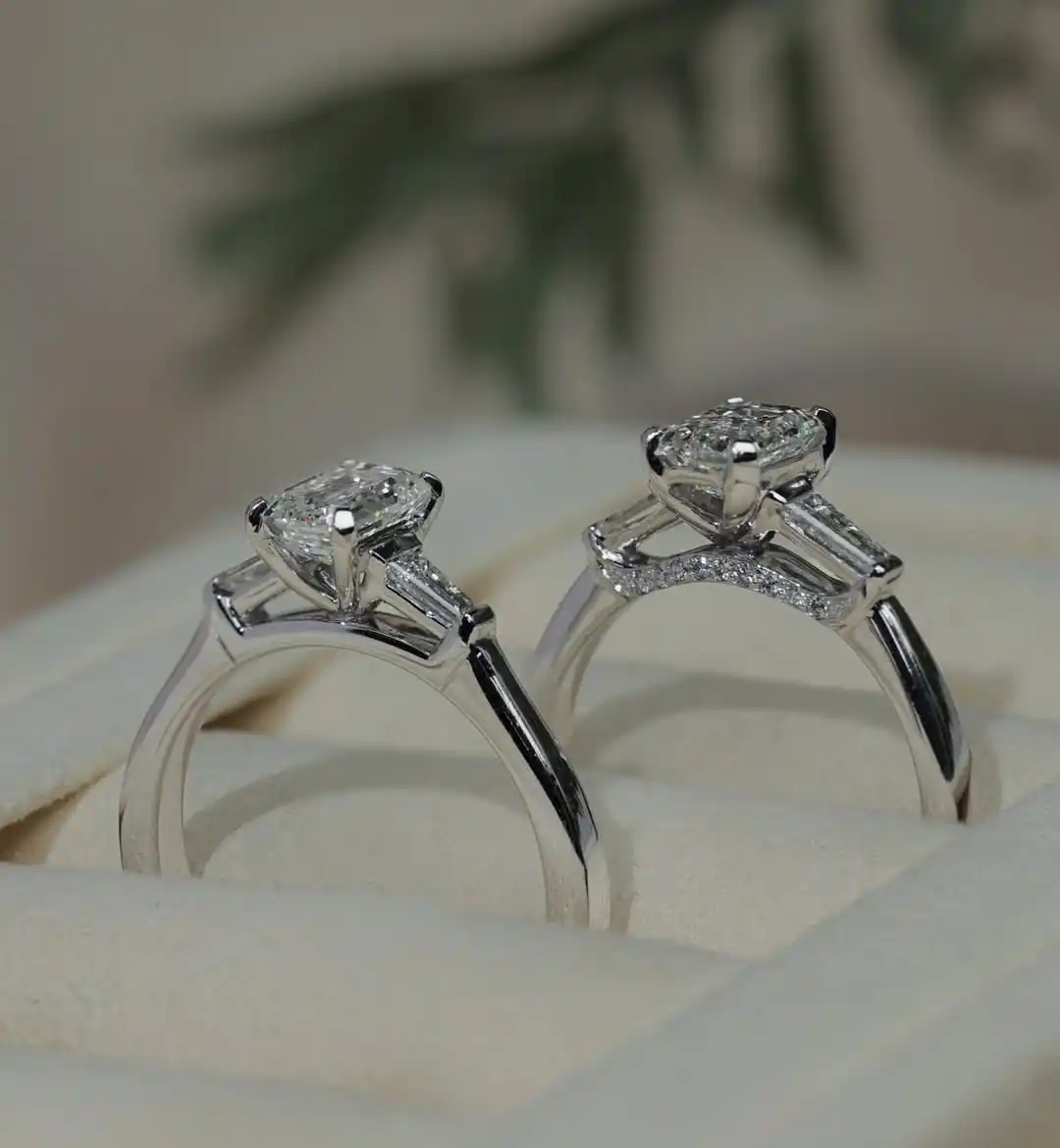
Diamond clarity
Diamond clarity refers to the presence of internal characteristics, known as inclusions, and surface characteristics, known as blemishes.
The clarity scale ranges from very high clarity grades through to diamonds with inclusions that may be visible to the naked eye.
For an engagement ring, don't assume you need to pay a premium for a flawless diamond. Many inclusions aren't visible without magnification, meaning a diamond with a lower clarity grade can still look completely clean to the naked eye.
This is often an area where you can save money without compromising the overall appearance of the ring.
Diamondport
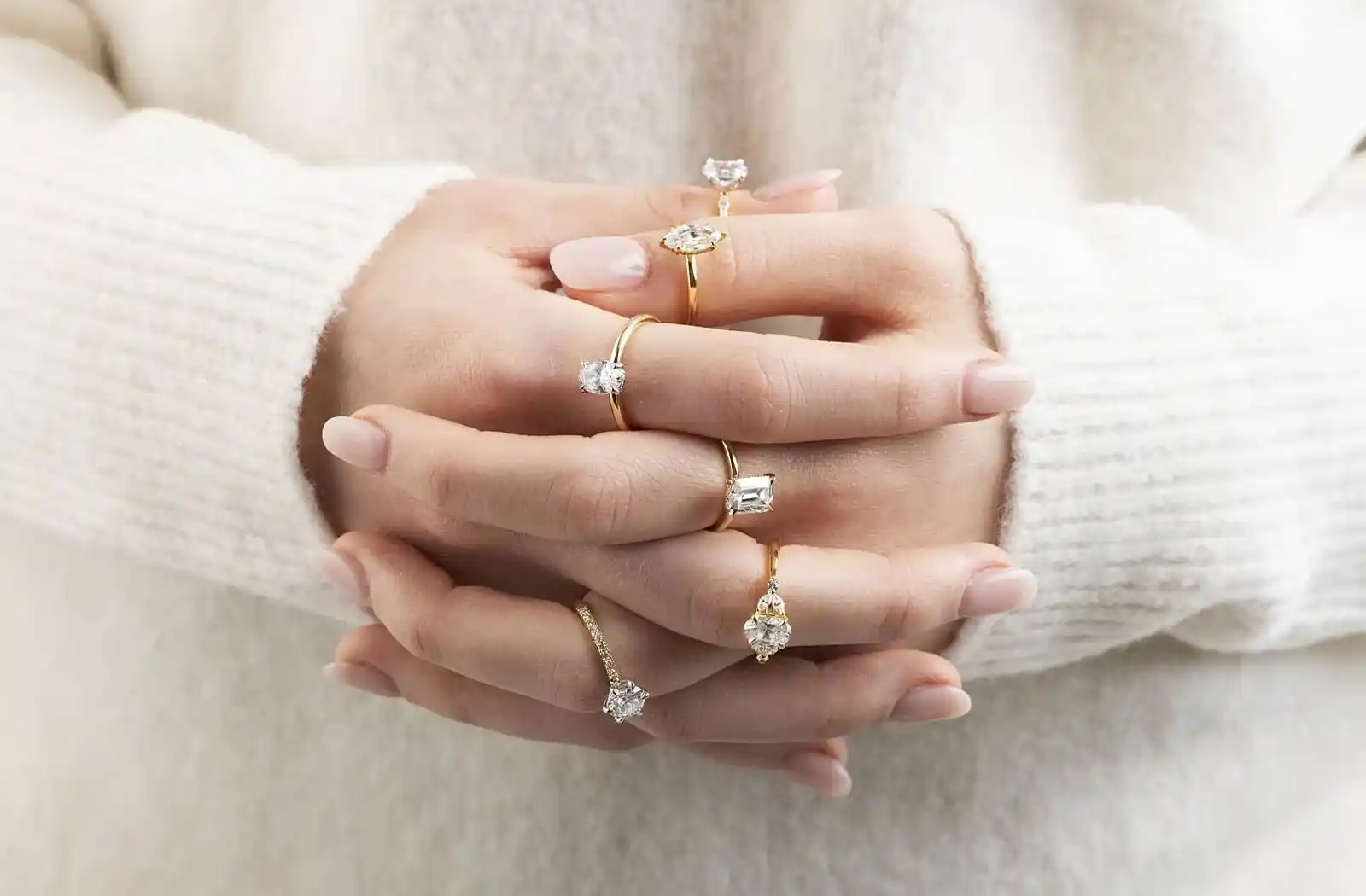
Diamond carat
Diamond carat refers to weight, rather than the visual size of the diamond.
One carat equals 200 milligrams, and a one-carat diamond doesn't necessarily look twice the size of a half-carat diamond. Different diamond shapes distribute their weight differently.
If you're looking for a larger-looking engagement ring diamond, consider the diamond's measurements as well as its carat weight.
Choosing a diamond just below a popular carat milestone – such as 0.90ct rather than 1ct – can also sometimes offer better value.
Andrew Mazzone Design Jewellers
Which diamond shape is best for an engagement ring?
Once you've tackled the 4Cs, choosing the shape is the fun part.
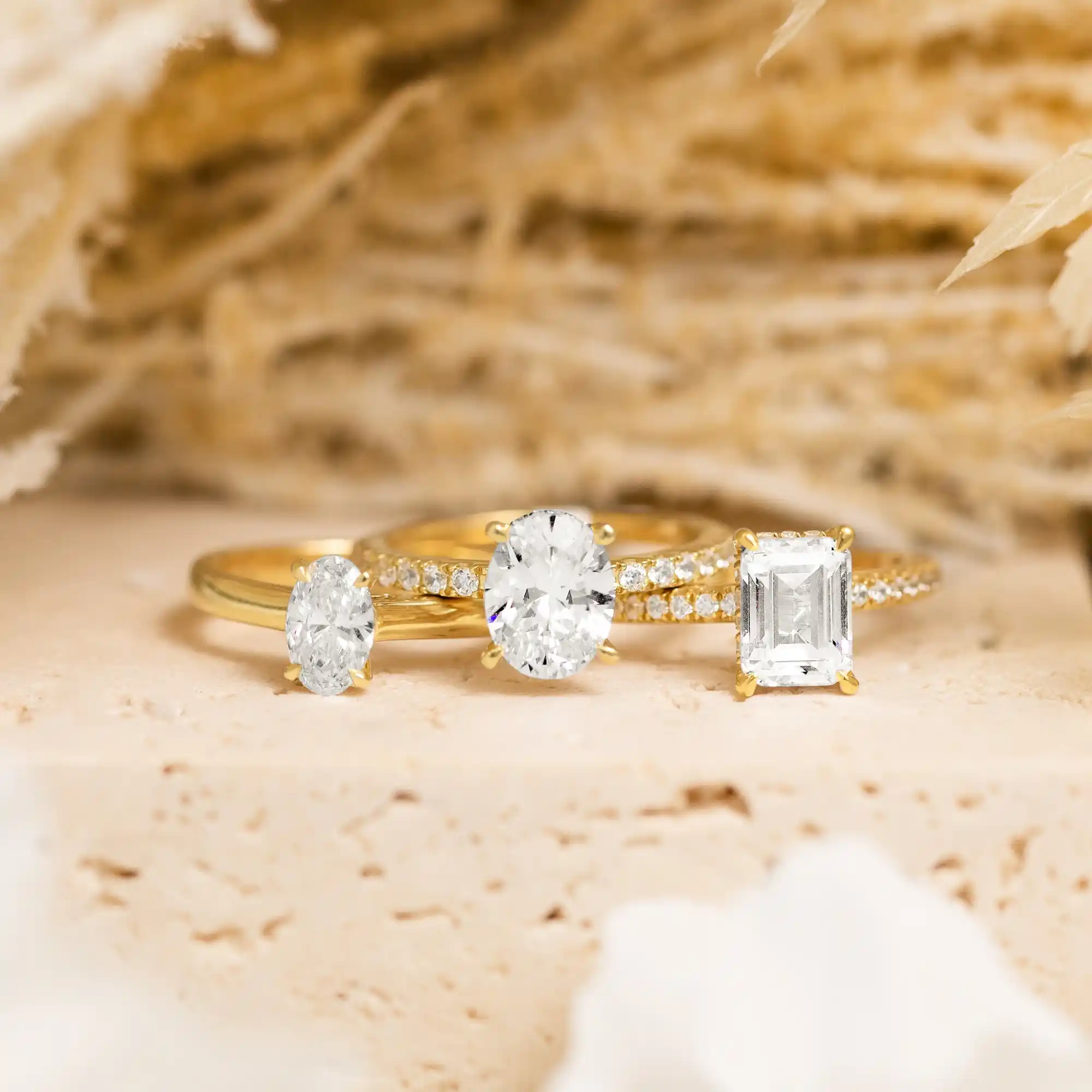
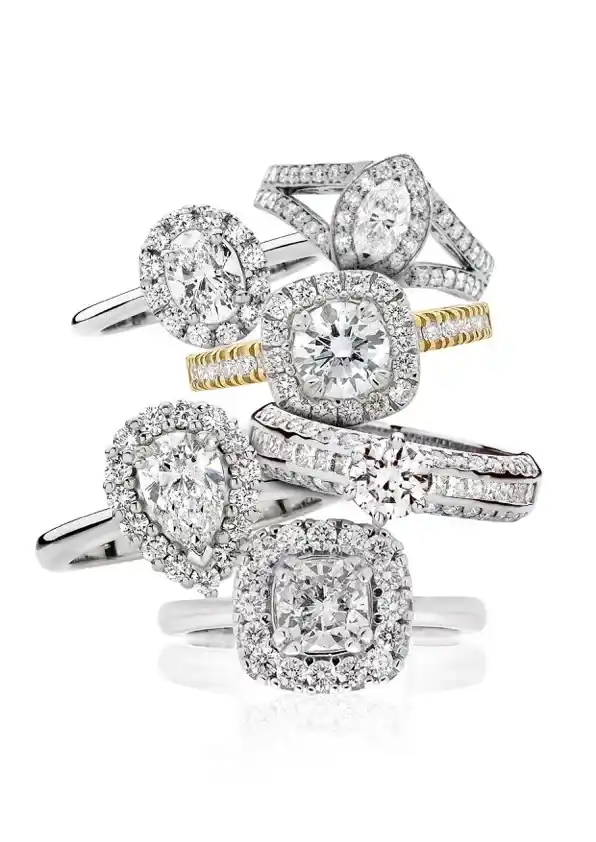
Popular diamond shapes for engagement rings include:
- Round brilliant: Classic, timeless and renowned for its sparkle.
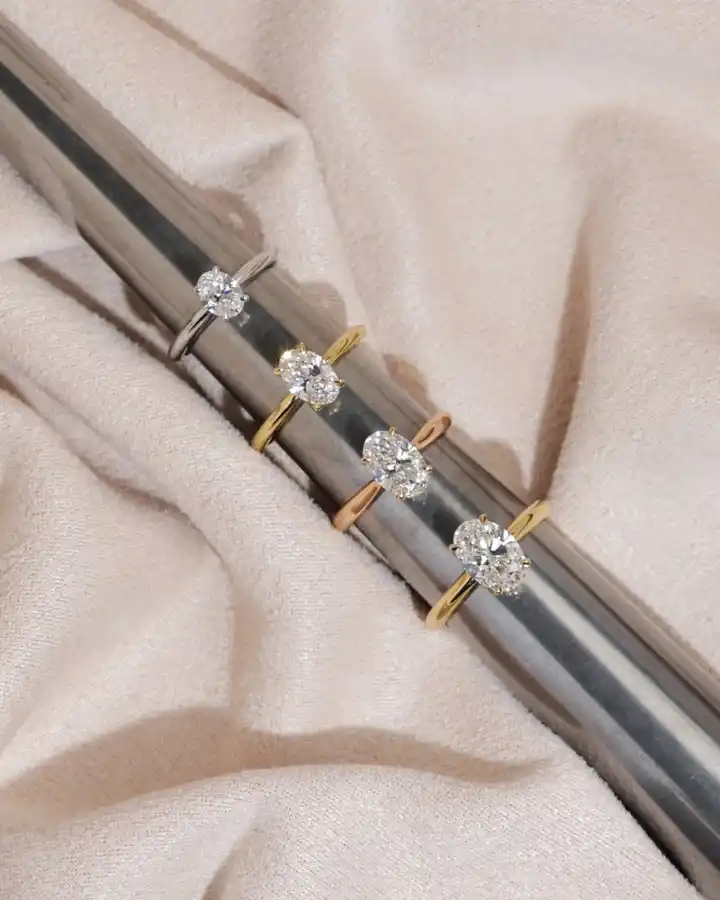
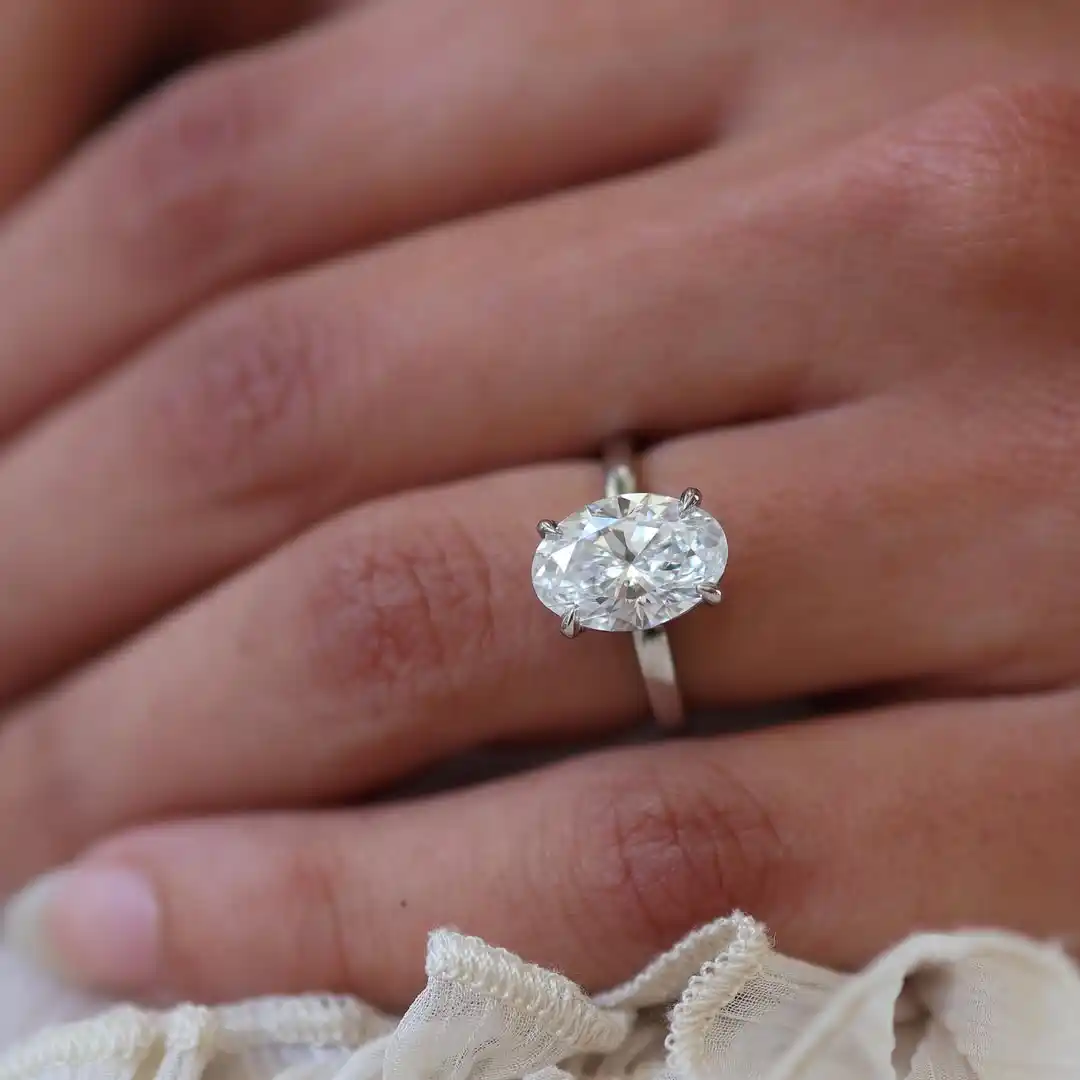
- Oval: Elegant and elongated, with a larger-looking appearance.
- Cushion: Soft, romantic and available in square or rectangular proportions.
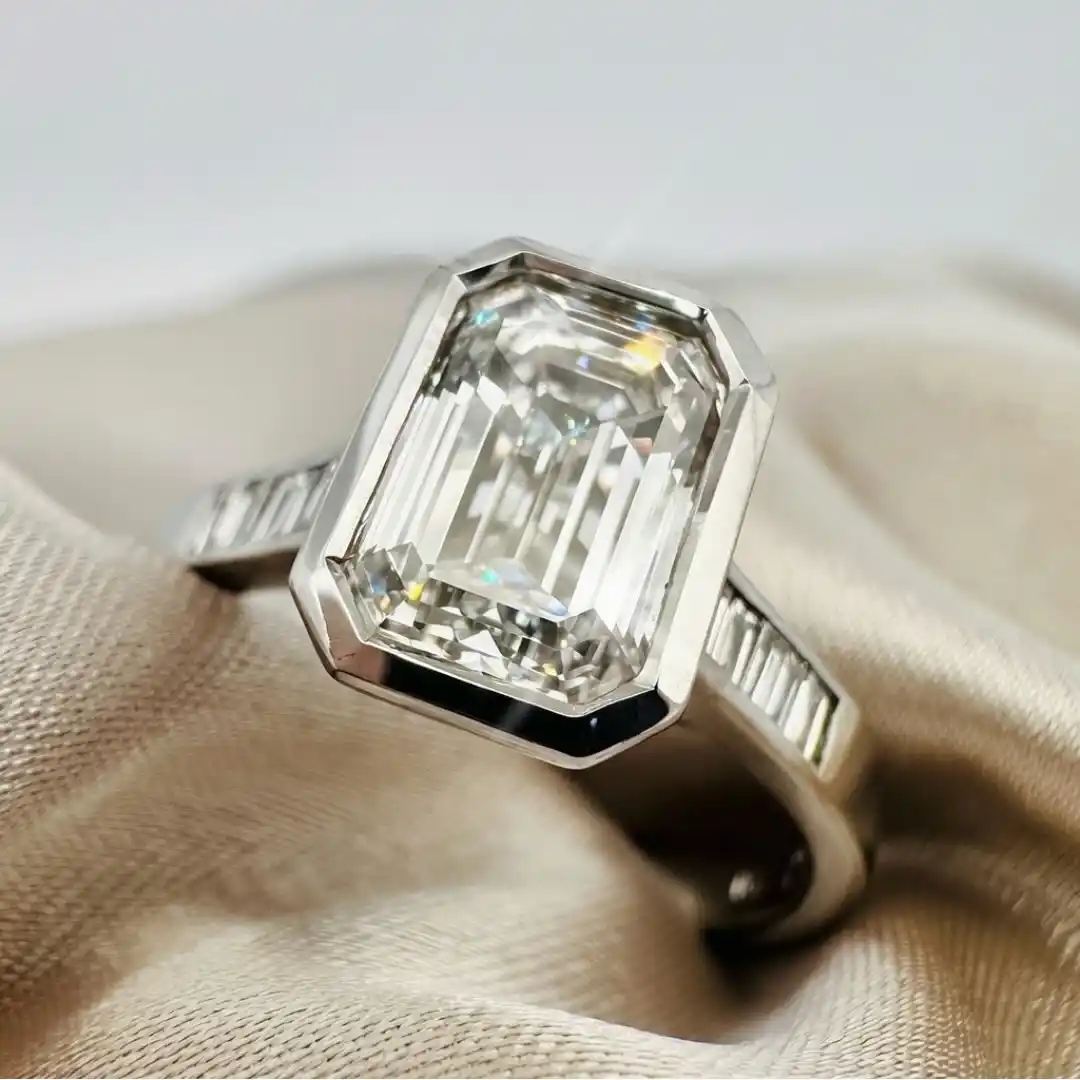
- Emerald: Sophisticated and understated, with long, clean facets rather than intense sparkle.
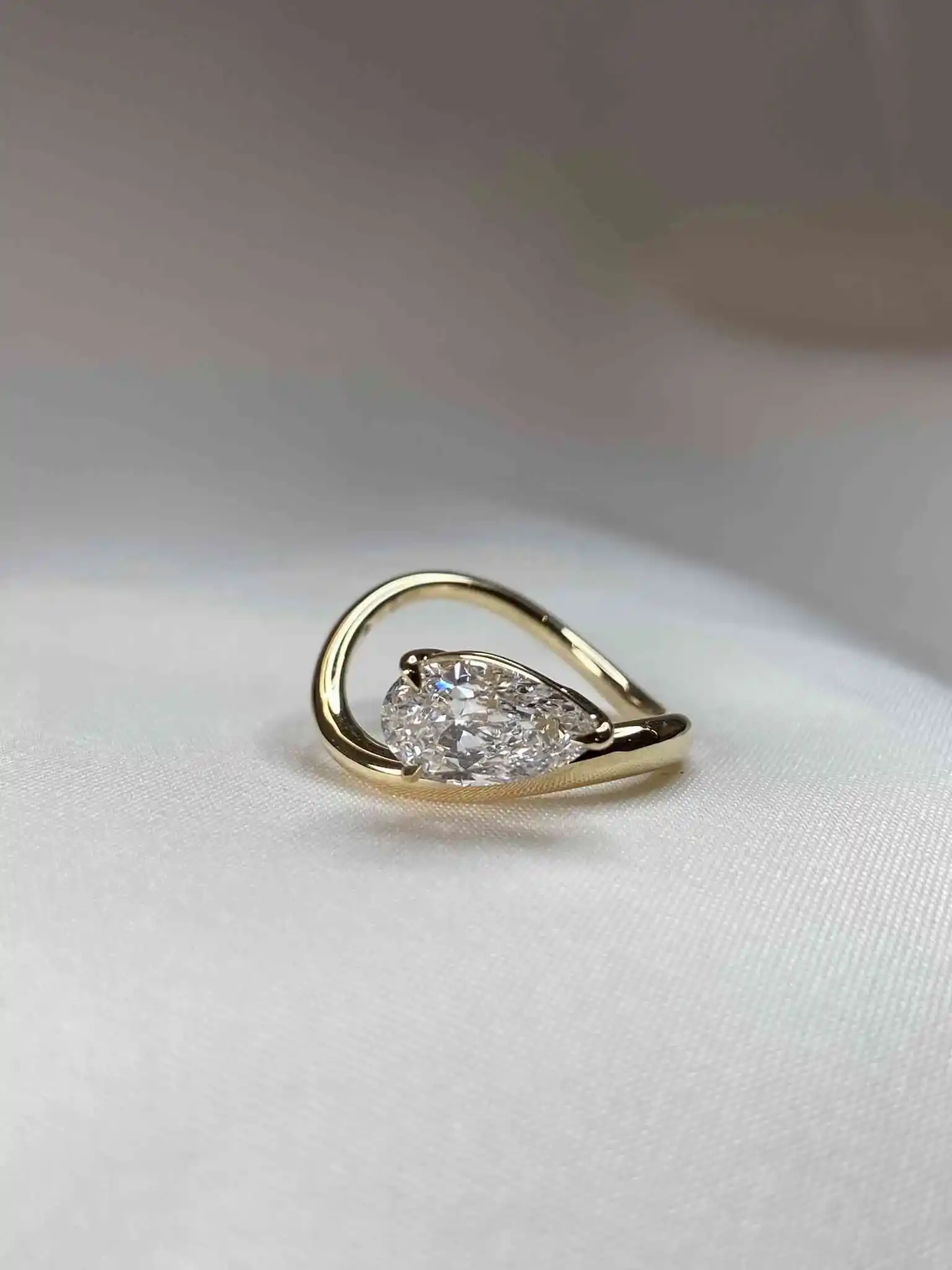
- Pear: A distinctive teardrop shape that can look beautifully elegant on the finger.
- Marquise: Long and narrow, making the finger appear more elongated.
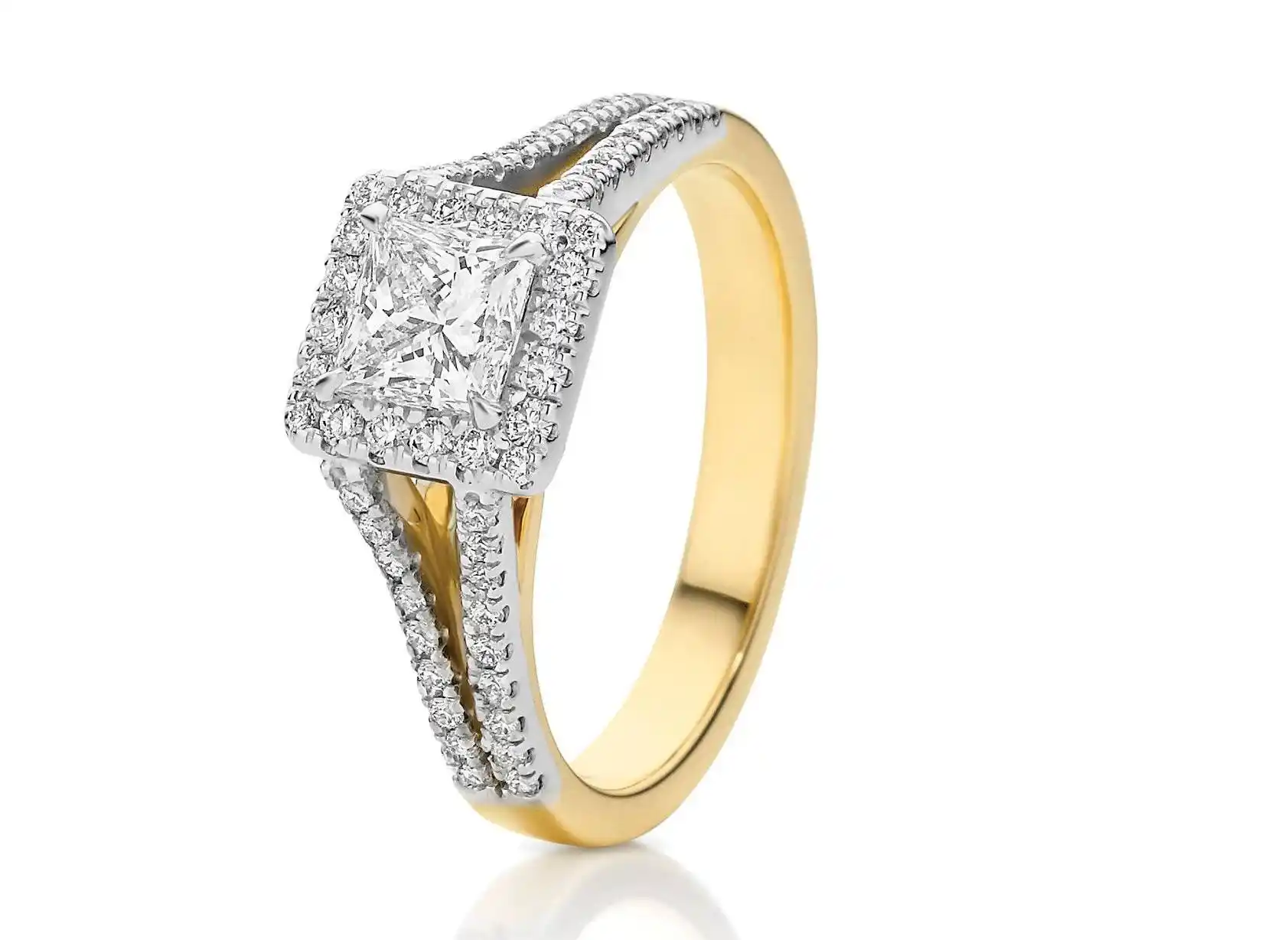
- Princess: A square-shaped option with a contemporary feel.
- Radiant: Combines the outline of an emerald cut with brilliant-style faceting.
- Asscher: Vintage-inspired, geometric and beautifully symmetrical.
There isn't one best diamond shape for an engagement ring. The right choice comes down to personal style, lifestyle and what looks best on the wearer's hand.
Xennox Diamonds
Consider the ring setting
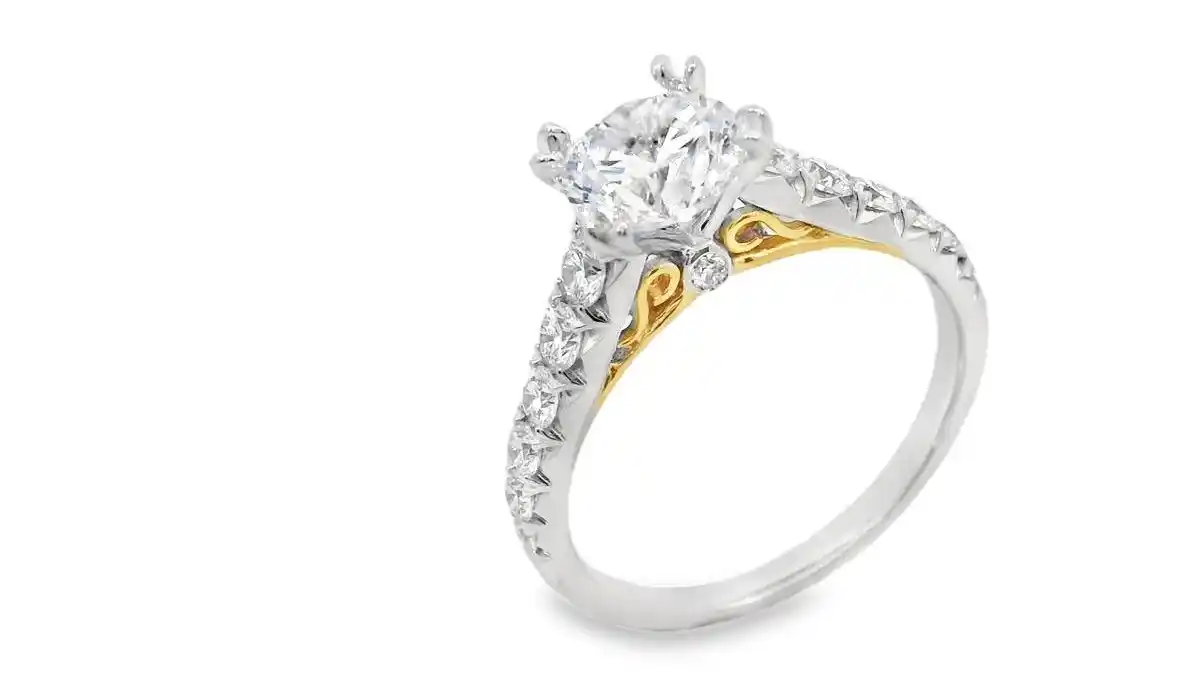
The engagement ring setting determines how the diamond is held in place and has a significant effect on the ring's overall appearance.
A solitaire engagement ring features a single central diamond and is a timeless choice. A halo setting surrounds the centre stone with smaller diamonds, creating additional sparkle and the appearance of a larger centre stone.
Other popular settings include:
- Three-stone settings, symbolising a couple's past, present and future
- Bezel settings, which surround the stone with metal and offer protection
- Pavé settings, featuring small diamonds set closely together along the band
- Cluster settings, where several stones are grouped together
- Hidden halo settings, adding subtle sparkle beneath the centre stone
If the ring will be worn every day, think about practicality as well as appearance. Some settings have more exposed stones or raised profiles, which may be less suitable for someone who works with their hands or prefers a low-profile ring.
Choosing the right metal
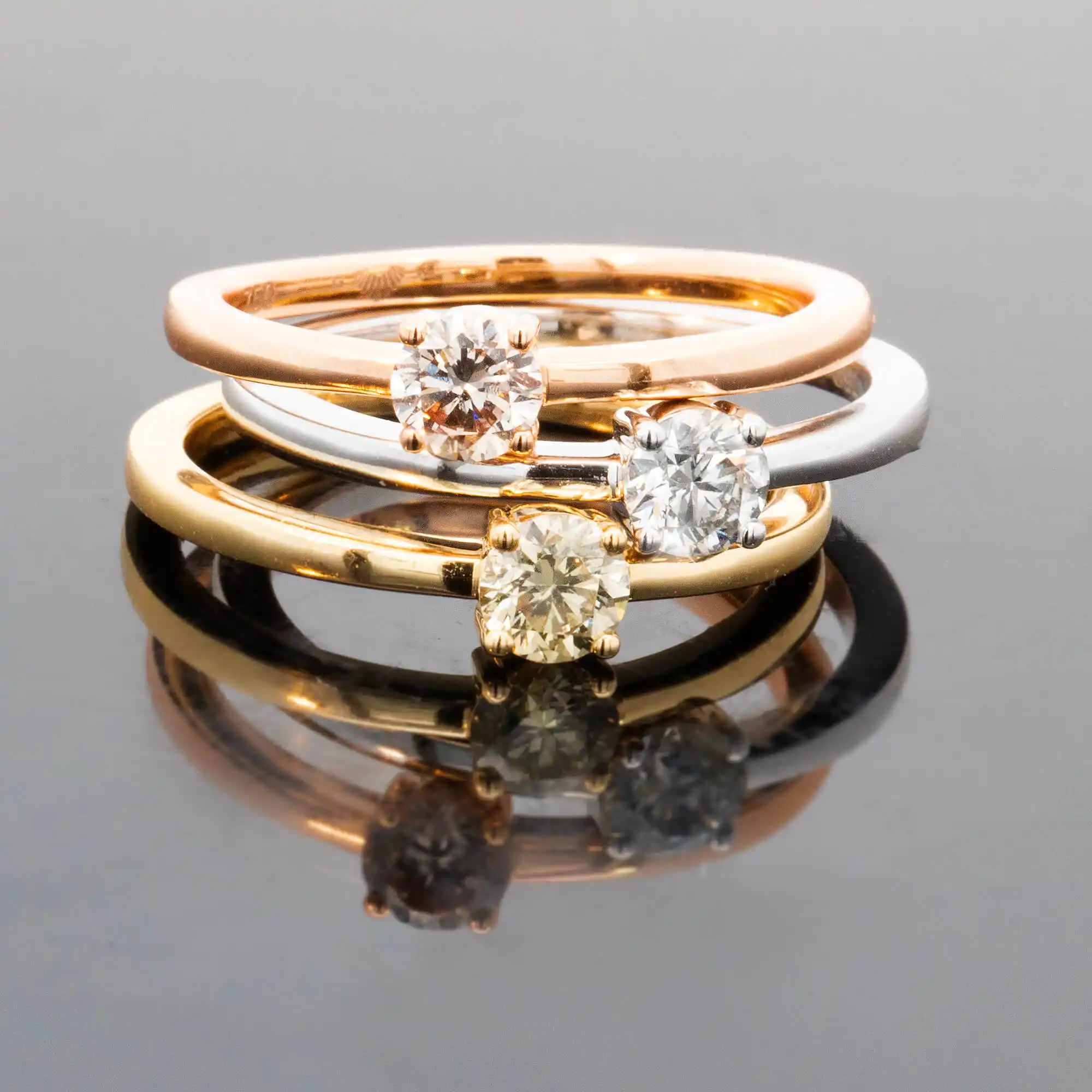
The most popular engagement ring metals in Australia include yellow gold, white gold, rose gold and platinum.
Yellow gold has a warm, traditional appearance, while white gold offers a contemporary look similar to platinum. Rose gold has a distinctive pinkish tone and suits romantic or vintage-inspired designs.
Platinum is durable and naturally hypoallergenic, and generally comes with a higher price tag.
Think about the jewellery your partner already wears. If their jewellery collection is predominantly yellow gold, for example, a yellow-gold engagement ring may feel more natural.
Gerard McCabe
Natural Diamonds vs Lab-Grown Diamonds
One of the biggest changes in the engagement ring market is the growing availability of lab-grown diamonds.
A lab-grown diamond has essentially the same chemical composition and crystal structure as a natural diamond. The key difference is its origin: a natural diamond forms in the Earth, while a lab-grown diamond is created using technology in a controlled environment.
For couples comparing natural vs lab-grown diamonds, price is often a major consideration. Lab-grown diamonds can provide an opportunity to purchase a larger stone or allocate more of the budget towards the setting.
Whichever you choose, ask about certification, grading and the jeweller's policies regarding the diamond.
Gerard McCabe
Diamond certification
A diamond grading report provides independent information about a diamond's characteristics, including its 4Cs.
When purchasing a significant diamond, ask whether it comes with a report from a recognised independent gemmological laboratory.
Don't rely solely on a jeweller's description such as "excellent quality". A grading report gives you more objective information to compare diamonds.
Andrew Mazzone Design Jewellers
Alternatives to diamond engagement rings
Diamonds aren't the only option for an engagement ring. Alternative engagement rings are becoming increasingly popular among couples looking for something more colourful, distinctive or budget-friendly.
Maleny Jewellers
Sapphire engagement rings
Sapphires are an excellent alternative to diamonds and are particularly associated with Australian jewellery thanks to Australia's history of sapphire mining.
Blue sapphire is the classic choice, but sapphires are also available in pink, yellow, green and other colours.
Moissanite engagement rings
Moissanite engagement rings are popular with couples who love plenty of sparkle but want an alternative to a traditional diamond. Moissanite is a lab-created gemstone with its own distinctive optical properties.
Ruby engagement rings
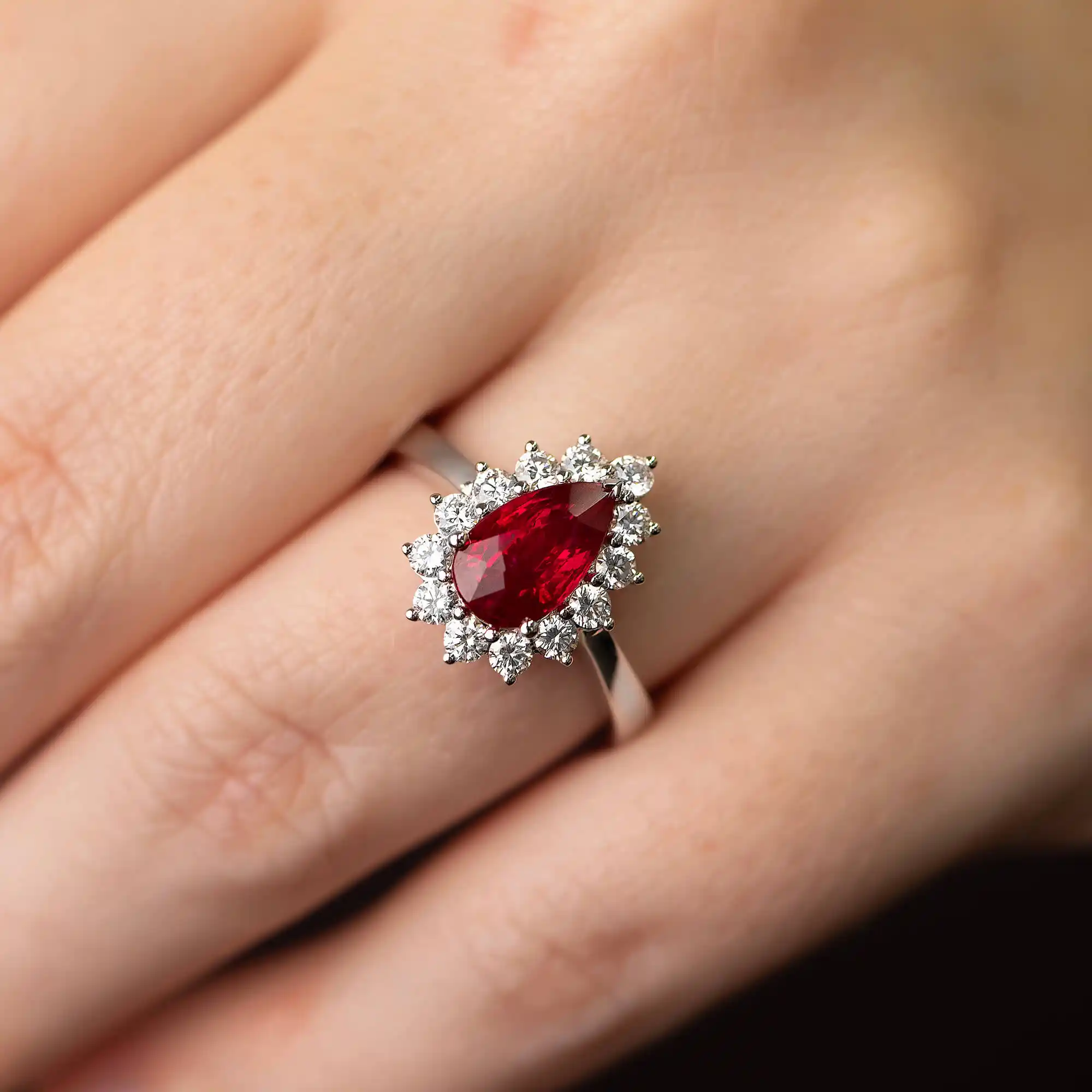
For something bold and romantic, a ruby engagement ring makes a striking statement. Red rubies are traditionally associated with love and passion and can work beautifully in both contemporary and vintage designs.
Gerard McCabe
Other gemstones
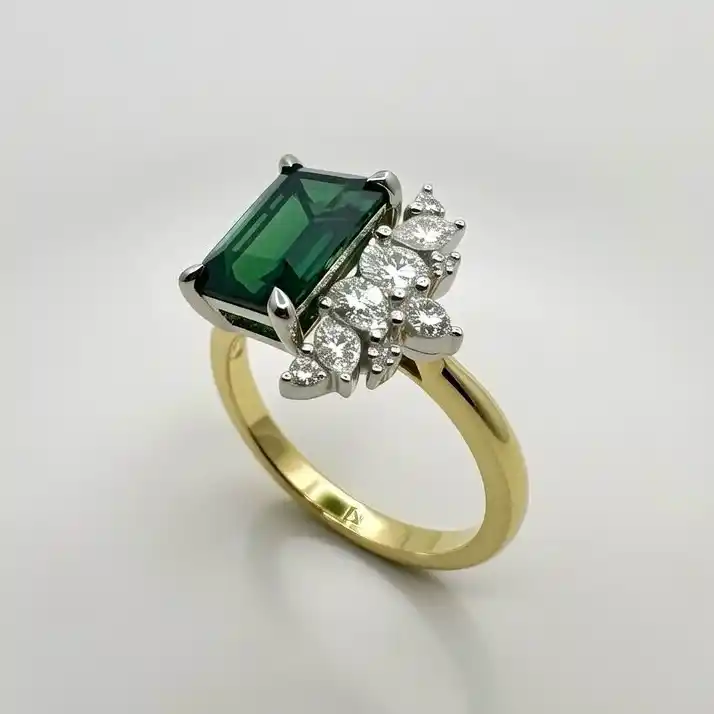
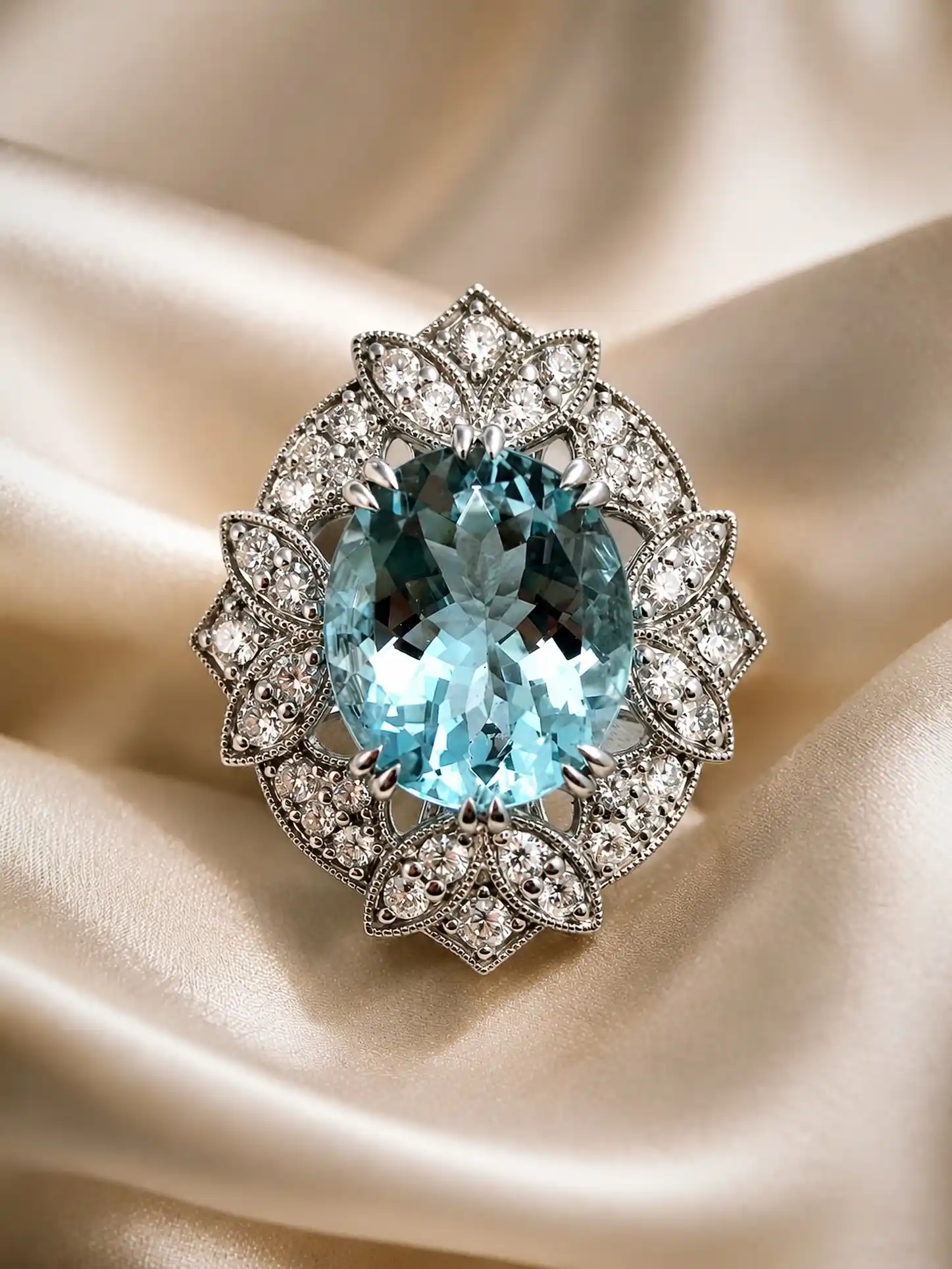
Emeralds, morganite, aquamarine, tourmaline and other coloured gemstones can create a truly individual engagement ring.
Just remember that not every gemstone has the same durability as diamond or sapphire. If you intend to wear the ring every day, ask your jeweller about the gemstone's hardness, durability and suitability for everyday wear.
Maleny Jewellers
Lifestyle considerations
An engagement ring is likely to be worn every day, so lifestyle matters.
Someone who works in an office may be perfectly happy with a high-set solitaire, while someone who works with their hands might prefer a lower-profile or protective setting.
Consider whether the ring’s intended wearer:
- Works with their hands
- Plays sport regularly
- Travels frequently
- Prefers minimalist or statement jewellery
- Likes vintage or contemporary styles
- Usually wears gold, silver-toned or mixed-metal jewellery
The most beautiful ring isn't necessarily the most practical ring for its wearer.
Williams The Jewellers
Should couples choose the engagement ring together?
There are no rules here.
Some people love the romance of a surprise proposal and prefer to choose the ring themselves. Others would rather choose an engagement ring together, particularly when the ring is an expensive and highly-personal purchase.
A compromise can work beautifully, choose a temporary or simpler proposal ring and shop together afterwards for the permanent engagement ring.
Alternatively, discreetly ask your partner's friends or family about their jewellery preferences before shopping.
Maleny Jewellers
Get the ring size right
While a jeweller is easily able to measure a person’s ring-size, finding an engagement ring size can be tricky if the proposal is meant to be a surprise.
If possible, borrow a ring your partner already wears on the intended finger and take it to the jeweller. Make sure it's a ring they actually wear on that finger, as finger sizes can differ.
You can also ask a trusted friend or family member for help.
If you get it wrong, don't panic. Many engagement rings can be resized, although some designs and gemstones have limitations, so it’s a good idea to discuss any concerns with your jeweller in advance.
Some couples also opt to propose with a gemstone, that they design into a ring together after the big question’s been popped.
Diamondport
Think about the wedding ring too
It's easy to focus entirely on the engagement ring and forget that a wedding band will eventually sit alongside it.
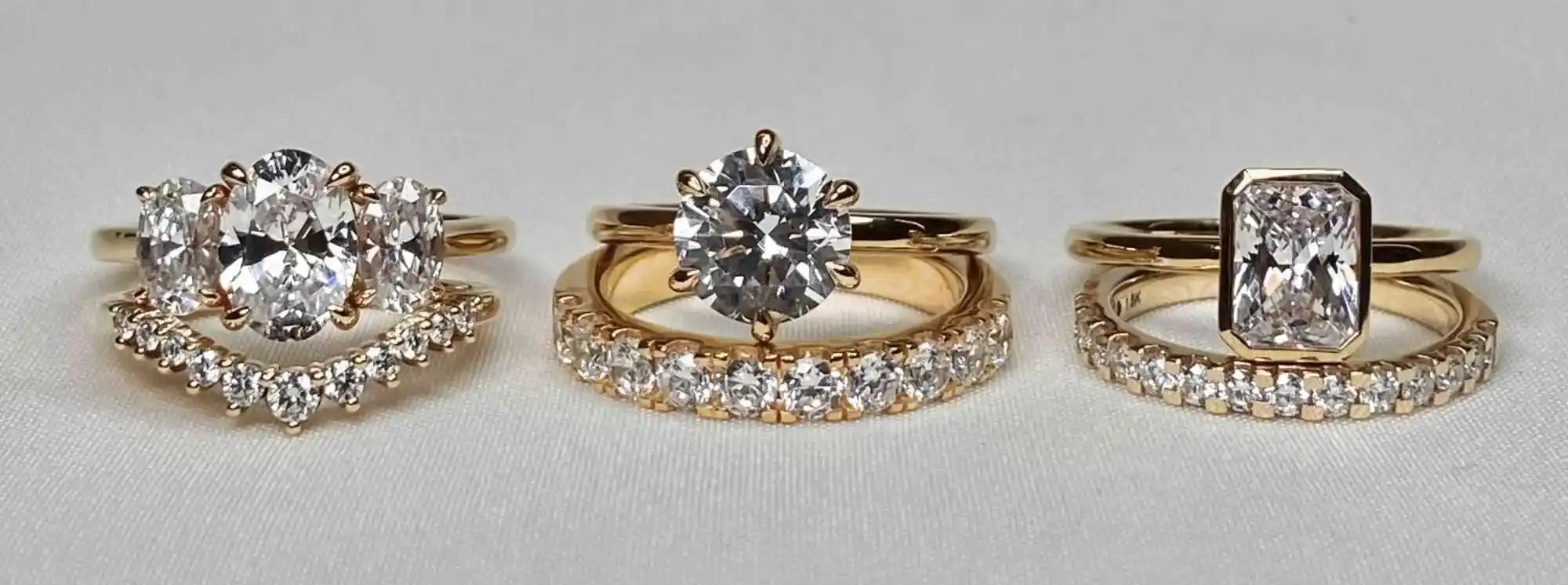
Consider how the engagement ring might pair with a wedding band. A traditional solitaire is generally easy to pair with many styles, while an unusually shaped or highly-detailed ring may require a curved, fitted or custom-made wedding band.
You don't have to buy both at once, but it's worth keeping the future wedding ring in mind.
Andrew Mazzone Design Jewellers
Consider insurance
Once you've found your dream ring, engagement ring insurance is worth considering.
Keep your purchase receipt and diamond grading report in a safe place and ask your insurer about coverage for loss, theft and accidental damage.
Some policies require the ring to be professionally-valued, particularly for higher-value jewellery.
Xennox Diamonds
Where should you buy an engagement ring?
Do your research before buying and look for a jeweller who clearly explains:
- The diamond's 4Cs
- Diamond certification
- The origin of the diamond or gemstone where relevant
- The precious metal used
- Ring sizing and resizing policies
- Warranty and aftercare
- Returns and exchanges
- Insurance valuations
- Cleaning and maintenance services
Don't be afraid to compare several diamonds and ask questions. A good jeweller should be happy to explain the differences rather than making you feel pressured to buy.
Seeking recommendations from family and friends, and reading verified wedding jeweller reviews – you can find plenty, provided by recent newlyweds, in the ABIA Directory – can be excellent ways of finding a reputable jeweller too.
In the end choose the ring that ‘feels’ right
There is no single formula for finding the perfect engagement ring.
The best engagement ring is one that reflects the person wearing it – whether that's a classic round diamond solitaire, a vintage-inspired sapphire ring, a contemporary lab-grown diamond or a colourful gemstone design.
Understand the 4Cs, set a realistic budget, consider everyday wear and take your time comparing options, then with the research done you’ll be ready to have fun finding the engagement ring that’s the perfect fit for you, or loved one.
Morgan & Co
As organisers of the longest-standing wedding awards in Australia, ABIA are experts when it comes to wedding planning and our website is designed to assist you with every step along the way. In the ABIA Directory you'll find lists of wedding vendors and wedding specialists local to you, all pre-vetted, rated and reviewed by recent newlyweds who used their services for their own wedding. Search for wedding venues, marriage celebrants, photographers, videographers, content creators, caterers, decorations, transport, hair stylists, makeup artists, caterers and mobile bars, live music and even dance lessons and photo booth hire, or take a look inside ABIA's website for wedding planning tips and information, from unique ideas to up-to-date wedding inspiration, honeymoon locations and an online wedding registry. You'll also find articles offering help with writing your own vows or choosing a wedding dress and organising multi-day and destination weddings.